
An Argument For Horror Fiction: Part History, Part Guide
you aren't too smart to be scared

The literary sphere sometimes feels like it has two rooms: an unlocked and easily accessible space with plenty of seating and cheap snacks labeled genre fiction; and the locked literary fiction room with a guest list, fancy couches, and tiny food on tiny plates. People who read regularly usually bounce between the rooms—that is to say, they enjoy books of most genres and styles—but some people in the literary fiction room refuse to leave their couches. Thus, they have only ever read what is considered acceptable lit fic. Only recently has horror been able to grace this room (with Tender is the Flesh and The Vegetarian, two great novels that everyone should read, as my prime examples), and even then, some argue that these books “aren’t really horror, but a meditation on [grief] [womanhood] [gender]” and therefore above the genre, because horror = cheap jumpscares, excessive blood, and poor writing.
I’m here to tell you that you’re thinking of horror wrong, and to try to tempt you to leave your fancy couch.
Author Douglas Winter wrote in his 1982 anthology Prime Evil, “Horror is not a genre, like the mystery or science fiction or the western. It is not a kind of fiction, meant to be confined to the ghetto of a special shelf in libraries or bookstores. Horror is an emotion.” The Horror Writers Association (HWA) follows this definition and states in their article ‘What is Horror Fiction?’:
“Horror has once again become primarily about emotion. It is once again writing that delves deep inside and forces us to confront who we are, to examine what we are afraid of, and to wonder what lies ahead down the road of life.” 1
We’ll be moving forward with this context of horror as an emotion.
It’s hard to scare readers in a way that sticks. You can’t just gross them out—real horror lingers in your mind afterwards, and that feeling of dread doesn’t leave you easily. Horror movies can get away with jump scares and fake blood. Horror novels can’t. To truly unnerve someone with only words, you have to dig deeper. Jamie Nash explains that horror stories always have a ‘sin,’ usually committed by the heroes, that adds an extra layer of nuance to the tale. (Nash, 2025)
“Believe it or not,” Nash writes, “the sin is actually what keeps horror from being cynical…In nihilistic stories, evil just happens, and then you die…too bad! Life stinks. But when the sin is responsible for the bad, there’s an understandable logic. A lesson. Some glimmer of hope. Because even if everyone dies, the audience goes away thinking, ‘Hey, well, at least justice is served and we’re safe so long as we don’t commit that sin.’”2 (Nash, 2025)
Horror novelists only have one tool. To elicit a fear of discomfort, dread, or shock with only lines on a page is an underappreciated feat, and to balance that with moral lessons, interpersonal conflicts, and societal critiques makes horror, for me, one of the most moving genres in the literary landscape. Stephen King’s The Shining isn’t really about the haunted hotel, William Peter Blatty’s The Exorcist isn’t really about the demon, and Mary Shelley’s Frankenstein isn’t really about a ‘monster.’ These texts use horror as a means to paint another picture, all while disturbing their audiences for generations to come.
Like any genre, horror has some clunkers. There are low effort and high shock value texts (commonly called splatterpunk) that don’t offer any sin or deeper meaning, and exist only in horror’s most basic form: to elicit an emotion of discomfort. I’ve never found splatterpunk to be scary. Graphic descriptions of violence with little to no plot or deeper meaning are like an empty plate of ketchup; all sauce and no substance. These texts still meet the definition of horror as an emotion, but are the equivalent of Taco Bell leftovers. Still, to reject an entire genre because of a few bad apples is to deprive yourself of some of the most creative and talented writers this world has to offer.
So, yes, Tender is the Flesh and The Vegetarian have deeper things to say about [gender] and [society], and they cross multiple genres, but they are also horror novels meant to disturb you and uproot your worldview and beliefs.
HISTORY OF HORROR FICTION
Humans have been telling scary stories around fires for as long as we have had fire and tongues. The Ancient Greeks and Romans told stories meant to unsettle—tales of murder, death, and tragedy. The Navajo tribe tells stories of Skin-Walkers, the Iroquois tribe warns of Oniate (or Dry Fingers), and tales of Mao Gui were popular in the 6th and 7th centuries CE China.3 There are ‘monster’ stories and ghoulish legends worldwide, and although many of them are intended as moral lessons, they are also designed to inspire fear, particularly in children.
But horror as an established literary genre (at least, as we know it today) didn’t emerge until the 18th century. According to Britannica:
“In Western literature the literary cultivation of fear and curiosity for its own sake began to emerge in the 18th-century pre-Romantic era with the Gothic novel. The genre was invented by Horace Walpole, whose The Castle of Otranto (1765) may be said to have founded the horror story as a legitimate literary form.”4 (Britannica, 2025)
Then came “Hansel and Gretel” in 1812, Frankenstein; or, the Modern Prometheus in 1818, The Legend of Sleepy Hollow in 1820, and so on. As Turkan Hasanzada describes in their article “The Context of 19th-Century English Horror Stories,” the horror works of 19th-century Victorian England were often influenced by attitudes towards the Industrial Revolution and urbanisation, and highlighted “human suffering, the anxieties about irreversible changes, and the dystopian consequences of innovation.”5 (Hasanzada, 2025). This context is especially relevant to Frankenstein; or, the Modern Prometheus, which used horror as a warning for human greed, technological advancement, and man’s desire to play god.
But public reception to horror has always been a mixed bag, especially in eras heavily influenced by Catholicism and purity culture. After the Jack the Ripper murders, some eyes turned to horror enthusiasts like Richard Mansfield, who produced the stage adaptation of The Strange Case of Dr. Jekyll and Mr. Hyde in 1886. He was forced to close the play two years later when a local paper suspected that he might be The Ripper himself, since he played Mr. Hyde on stage.6 When Shirley Jackson wrote ‘The Lottery’ in 1948, a short story about a fictional town that randomly selects one of its residents to be stoned to death, the negative reception was swift. Jackson and the story’s publisher, The New Yorker, were said to have received ten hate letters a day, with some calling the story “outrageous”, “gruesome”, and “utterly pointless.”7 (Franklin, 2013) The Lottery is now considered a classic among horror and gothic literature, and it was a required text in my high school gothic literature class.
With Jackson and the editors of The New Yorker suffering an onslaught of hate mail, they’d never have predicted the Big Horror Boom that was to come: just one year before the publication of ‘The Lottery,’ Stephen King was born. In 1974 he published Carrie, in 1976 Carrie was adapted into a film, and in 2025, he is a thorn at the bottom of my shoe.
Stephen King is the only author most people think of at all, because most people don’t read, and even among avid readers, he’s the first name that comes to mind when you think of “horror author.” His books dominate the shelves and have been adapted into movies, TV shows, and comics. If you haven’t read him, you’ve still watched one of his movie adaptations: It, The Shining, Misery, The Running Man, or Carrie. King is a talented author, and I can’t thank him enough for all that he did for the horror genre, but his protagonists are all middle-aged white fathers, and his women are usually written in one of two categories (horny or ugly), and I think there are plenty of other great horror authors to start with.
Horror movies had a boom as well, with the The Exorcist in 1973 (adapting the novel by William Peter Blatty), The Texas Chain Saw Massacre in 1974, Jaws in 1975 (adapting the novel by Peter Benchley), the aforementioned Carrie in 1976, and Friday the 13th in 1980. Hollywood executives saw an untapped market and dove headfirst into HORROR, HORROR, HORROR! Now in 2025, we have genius directors like Jordan Peele, Mike Flanagan, James Wan, Ari Aster, and Coralie Fargeat. Additionally, we now have modern literary classics like Mexican Gothic (Silvia Moreno-Garcia), What Moves the Dead (T. Kingfisher), The Vegetarian (Han Kang), and Tender is the Flesh (Augustina Bazterrica).
When asked about the sudden horror boom, horror author Cassandra Khaw told Esquire, “Investors are beginning to realize that horror is profitable, as opposed to that odd little thing that gothy weirdos like me obsess over.”8
Though horror literature has gone from “utterly pointless” to topping the charts, it’s still treated—at best—indifferently by literary elitists. If the reason is that you don’t want to read Stephen King (fair) or that you don’t think the genre has anything to offer (unfair), then I implore you to take my hand and continue with an open mind.
MODERN HORROR AUTHORS OTHER THAN STEPHEN KING
Here are ten modern authors (mostly from the US) with varying styles and approaches to the genre. I’ve even had the pleasure of meeting three of them—Stephen Graham Jones bought a book from my booth and yes, yes I screamed inside.
Victor Lavalle
An award-winning NYC author (World Fantasy Award, British Fantasy Award, Bram Stoker Award, Whiting Writers' Award, a Guggenheim Fellowship, Shirley Jackson Award, American Book Award) whose novel, The Changeling, is being adapted into an Apple TV+ show.
“LaValle uses the thrills of horror to draw attention to timely matters. And he does so without sucking the joy out of the genre. . . . A striking and original American novelist.” —The New Republic [on The Devil in Silver]

Stephen Graham Jones
Another award-winning author (at least 20 awards and counting) who also teaches creative writing at UC Boulder. His latest novel, The Buffalo Hunter Hunter, was on Obama’s 2025 reading list and is sold out pretty much everywhere.
“Inventive and spine-tingling…a master class in voice. Queasy, uneasy, The Buffalo Hunter Hunter plays with the interplay between religion and historical guilt, identity and appetite.” —The Washington Post (on The Buffalo Hunter Hunter)
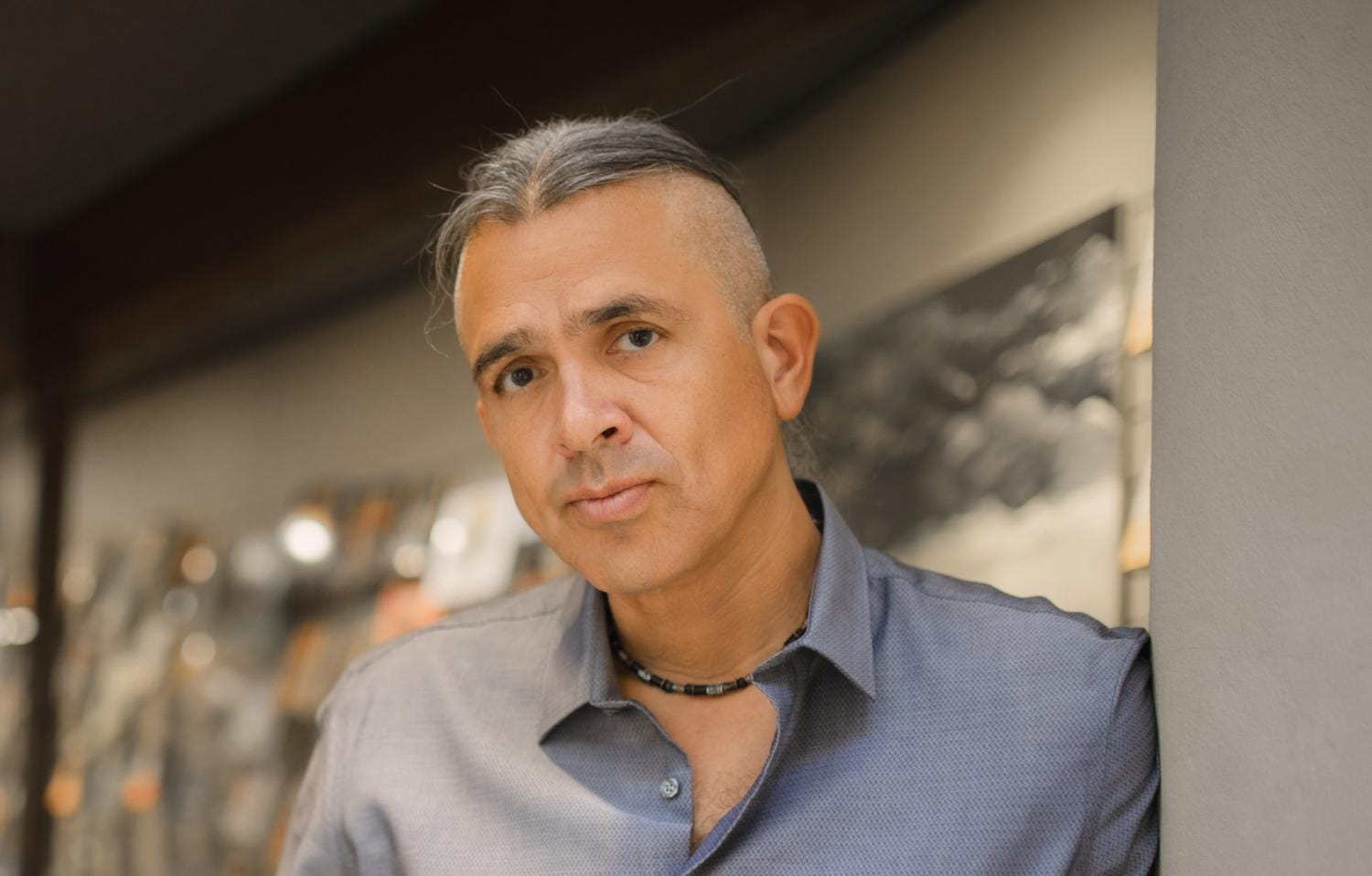
Eric LaRocca (he/they)
A Boston writer with a taste for extremely gory queer tales, LaRocca started off as a self-published author before making enough waves to be picked up by traditional publishers (notably Simon & Schuster, who are publishing his upcoming novel Wretch in March of 2026).
”His artistic muse easily transcends the very label which defines genre and offers instead a peeled-back look at our bare selves in a world where showcasing what’s truly inside is often controversial at best, feared and shamed or downright hated at worst, whilst compassion and understanding become virtues most discarded.” — Cemetery Dance Publications
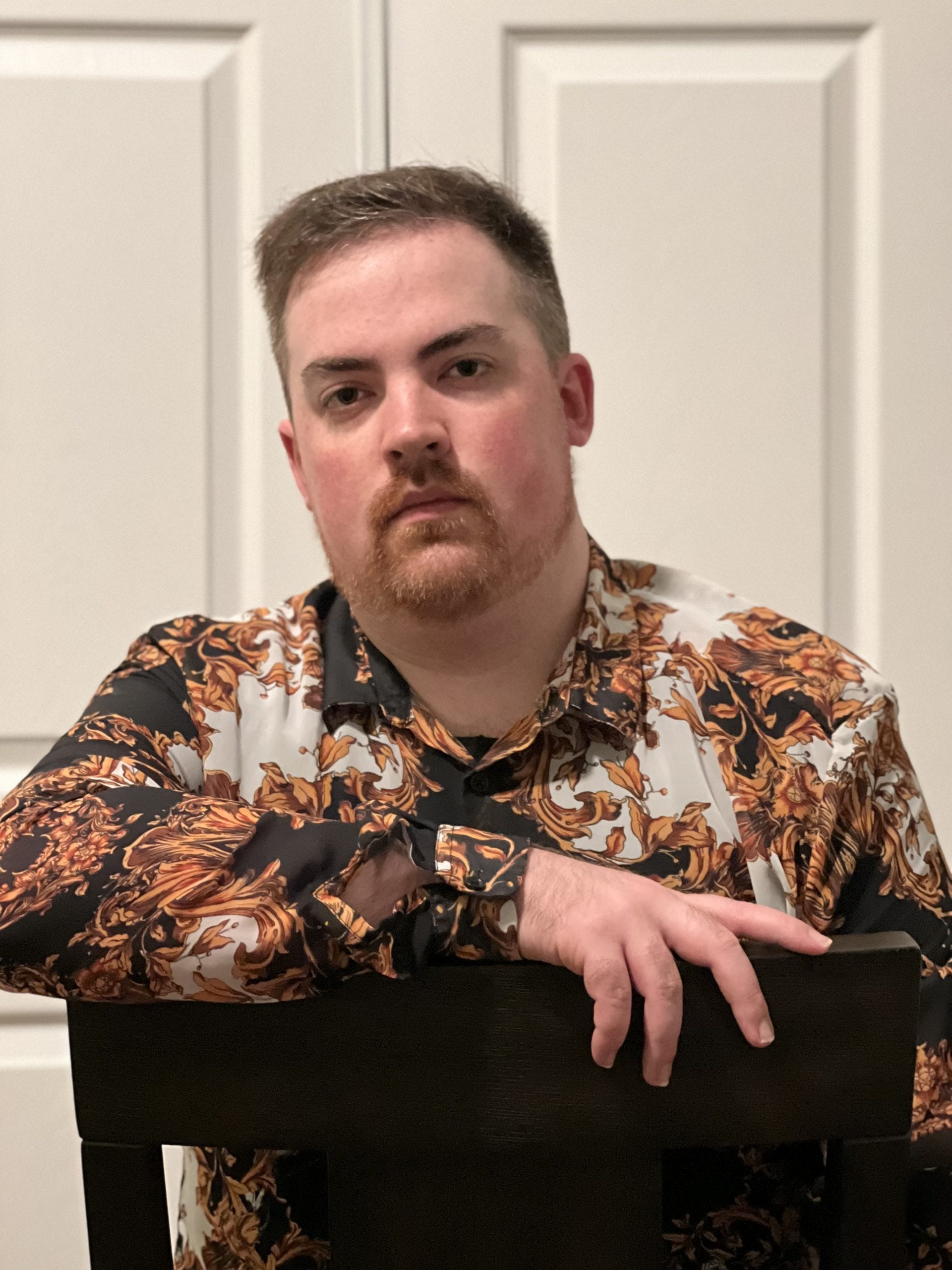
Mona Awad
A Canadian novelist whose writing has appeared in The New Yorker, The New York Times, Vogue, McSweeney’s, TIME magazine, Ploughshares, The Walrus, and Maisonneuve. She weaves horror and the macabre with satirical commentary on society, and takes a more literary approach to the genre. She also teaches creative writing at Syracuse University.
“Awad artfully and acutely explores suffering, artistry, and the limitations of empathy.” ~KIRKUS REVIEWS

Andrew Joseph White
A transgender American author with an MFA in Creative Writing from George Mason University. He’s written horror for both adult and YA audiences, with a focus on queer narratives. He is best known for his novels Hell Followed With Us and You Weren’t Meant to Be Human.
“You Weren’t Meant to be Human is dysphoria bound into words. Andrew Joseph White captures a beautifully disgusting world that’s all too familiar to neurodivergent and trans individuals, with a plot that offers nothing but shocking pleasure with each page turn.” – Linden Lewis, author of The First Sister (on You Weren’t Meant to Be Human)
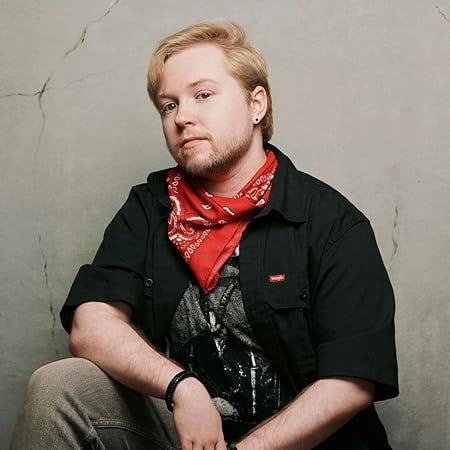
Agustina Bazterrica
An Argentine author whose works have been published in over thirty languages, Bazterrica is best known for her dystopian horror novel Tender is the Flesh, which sold over 600,000 copies in the US. Her stories incite discussions on gender, capitalism, and religion. She has been considered a “feminist horror novelist” by some.
"Barbaric, brutal, and utterly beautiful. The Unworthy is a searing haunt of a novel that I will never forget."
—Lucy Rose, author of The Lamb (on The Unworthy)
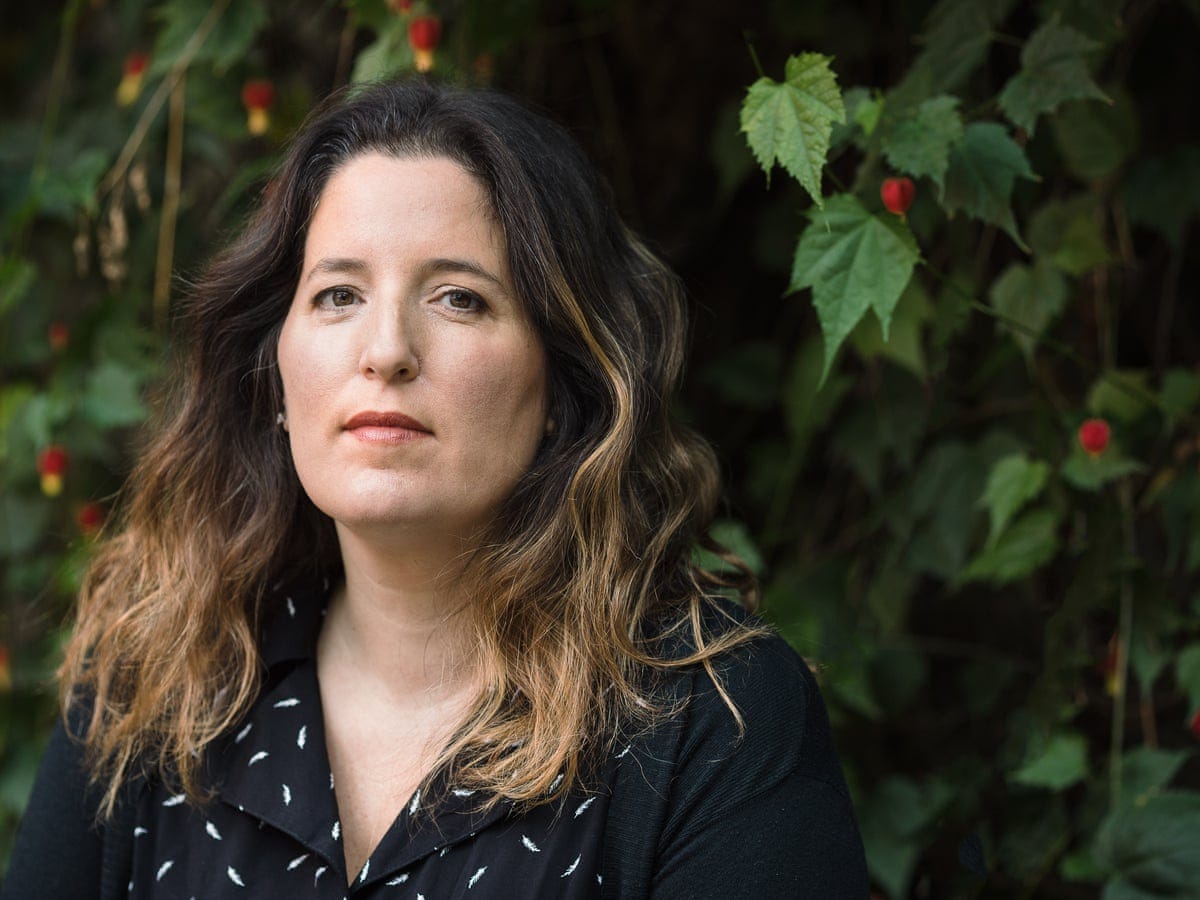
Clay McLeod Chapman
Novelist, comic author, and podcast writer—Chapman is a horror extrordinaire. He was nominated for the Bram Stoker and Shirley Jackson awards, and currently teaches writing for Pace University’s MFA program. He is best known for his novels Wake Up and Open Your Eyes and What Kind of Mother. He takes a more comedic approach to the genre and is associated with director Jordan Peele:
“Clay McLeod Chapman is one of my favorite horror storytellers working today.” —Jordan Peele
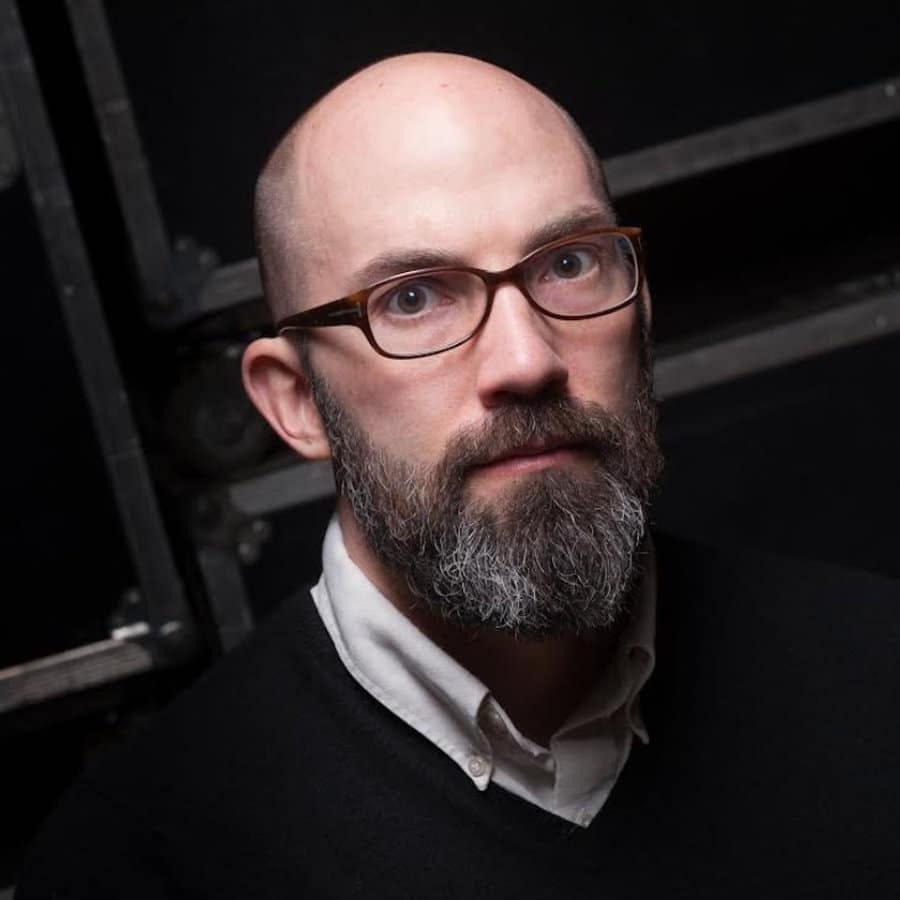
Grady Hendrix
Considered the “Goosebumps author for adults,” Hendrix’s novels are high-concept standalones that weave humor with horror. He’s an award-winning American author, most famous for My Best Friend’s Exorcism and Horrorstor (about a haunted IKEA). He has a very dedicated fanbase.
“Grady Hendrix’s horror novels are a gateway drug to the genre…By weaving violence, family trauma and humor, Hendrix creates a texture that engages the reader emotionally and viscerally…[a] gripping, wildly entertaining exploration of childhood horrors.” —The New York Times
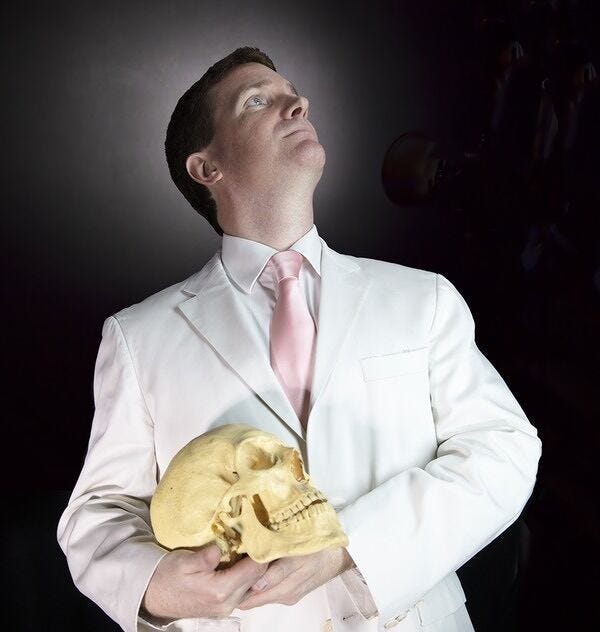
Isabel Cañas
Cañas is a speculative fiction writer with a doctorate in Near Eastern Languages and Civilizations, and writes novels inspired by her studies and heritage as a Mexican-American woman. Her novels usually feature supernatural elements, feminist themes, and romance. She is most known for Vampires of El Norte and The Possession of Alba Diaz.
“With every book, Isabel Cañas asserts jaw-dropping peerlessness at her craft. Chilling and tender, bloody and sensuous, The Possession of Alba Díaz is Cañas working at the height of her prodigious powers, expanding her fascinating Gothic oeuvre with her best and most brutal work yet. I devoured it.” –Olivie Blake, New York Times bestselling author of The Atlas Six (on The Possession of Alba Diaz)
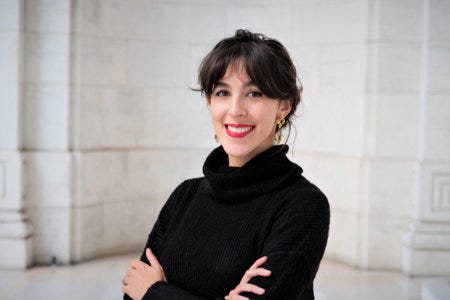
Silvia Moreno-Garcia
Moreno-Garcia is a Canadian author and editor, and the recipient of the Locus, British Fantasy and World Fantasy Awards. She is best known for her novels Mexican Gothic and The Bewitching, but writes in a variety of genres, not just horror. She received her MA in Science and Technology Studies from the University of British Columbia. She also actively runs a literary blog!
“It’s Lovecraft meets the Brontës in Latin America, and after a slow-burn start Mexican Gothic gets seriously weird” —The Guardian (on Mexican Gothic)

BOOK RECOMMENDATIONS FROM MY PERSONAL LIBRARY
With our definition of horror as an emotion, there are crumbs of horror across every literary genre: The Hunger Games is a terrifying portrayal of the future; A Game of Thrones disturbs with gore and sexual violence; and 1984 even has torture scenes. But these are not horror novels. I believe the difference is intention—some authors use fear as their main driving force, while others sprinkle it throughout.
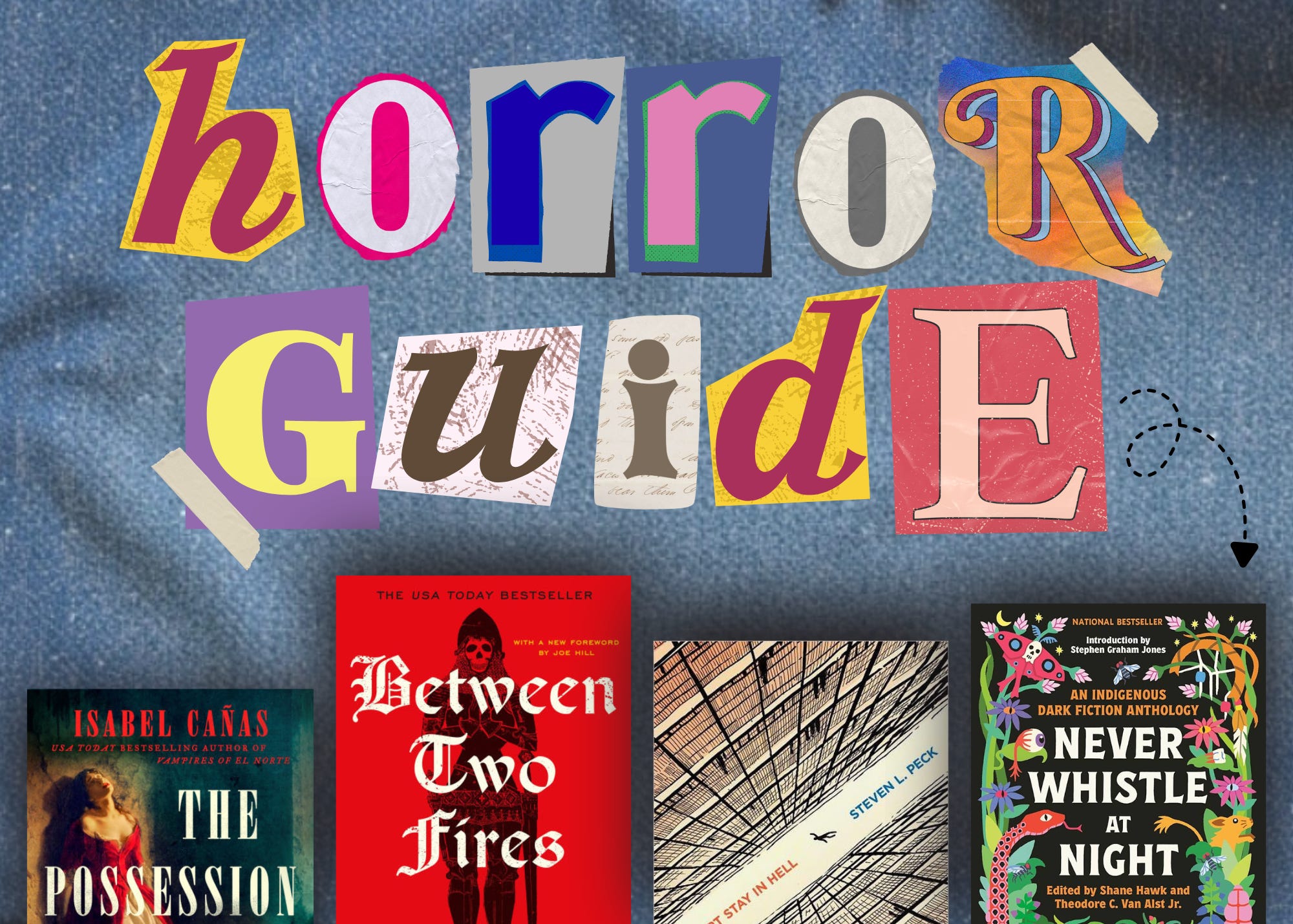
I don’t want to send you off with too much homework—at least, not more than researching the authors above to see if any of them speak to you. I’ve made the next part easy. Here are eight modern horror novels that I have personally read (or have been read by my partner) and that I recommend.
Between Two Fires by Christopher Buehlman
A disgraced knight, a hedonistic priest, and a young girl try to survive plague-torn medieval Europe in this terrifying medieval horror novel. Demons—Biblically accurate, truly horrifying demons—are after the girl and will stop at nothing to get her. Perfect for dark fantasy lovers, fans of The Last of Us, and Dark Souls players.
“Cormac McCarthy's The Road meets Chaucer's Canterbury Tales in this frightful medieval epic...Buehlman...doesn't scrimp on earthy horror and lyrical writing in the face of unspeakable horrors...an author to watch."—Kirkus Reviews
A Short Stay in Hell by Steven L. Peck
A Mormon dies and ends up in a Hell for a religion he’s never heard of, trapped in a lawless library that never seems to end. Each book in the library contains randomly generated text, and in order to escape, he must find the one book that describes his life on Earth in detail. But he isn’t alone—thousands of others were sent to Hell with him, and as the years go by, they have less and less to lose…
“Profound and disturbing, A Short Stay In Hell is a perfect blend of science fiction, theology, and horror. A terrifying meditation on faith, human nature, and the relentless scope of eternity. It will haunt you, fittingly, for a very, very long time. ---- Dan Wells, author of I Am Not a Serial Killer
The Possession of Alba Diaz by Isabel Ca(n)as
In 1765, a woman enters a mine and leaves with something ancient inside her. Surrounded by the plague and untrustworthy zealots, the only place to turn is her fiancé’s cousin, a handsome loner who can’t quite shake her off, no matter how hard he tries. This novel was a classic historical romance with added paranormal horror, and possession as a metaphor for bodily autonomy. I loved it!
"The classic elements of a possession story shine in this Gothic horror romance, but Cañas builds on them, using possession to explore themes of power, greed, agency and autonomy. And—this is important!—to prove that possession can be hot." —New York Times
The Vegetarian by Han Kang
A woman suddenly decides to go vegetarian, shocking her husband and family members. This personal decision drastically changes the course of her life, and everyone around her tries to assert their hold on her body, emotions, and psyche. It’s a psychological horror that, to some people’s relief, focuses very little on animal death.
“A complex, terrifying look at how seemingly simple decisions can affect multiple lives . . . In a world where women’s bodies are constantly under scrutiny, the protagonist’s desire to disappear inside of herself feels scarily familiar.”—Vanity Fair
The Starving Saints by Caitlin Starling
A castle has been under siege for months, and just as the inhabitants start to turn on each other for food, three strangers breach the gates. They bring baskets of food—vegetables, meat, bread—yet nobody saw them enter with these baskets. In fact, nobody saw them enter at all. As the castle plunges into chaos and violence, the only hope against these strangers is the king’s madwoman, a vengeful young girl, and a knight torn between her duties.
“A magnum opus level hybrid between haunted, sapphic, culty, witchy, and cannibalistic.” - Crime Reads
What Moves the Dead by T. Kingfisher
When Alex Easton, a retired soldier, receives word that their childhood friend Madeline Usher is dying, they race to the ancestral home of the Ushers. What they find there is a nightmare of fungal growths and possessed wildlife. Aided by a redoubtable British mycologist and a baffled American doctor, Alex must unravel the secret of the House of Usher before it consumes them all. A reimagining of Edgar Allen Poe’s “The Fall of the House of Usher”—with fungal horror.
"An infectious new spin on classic Gothic horror.”—Booklist
The Unmothers by Leslie Anderson
A journalist is sent to a small, backward town to investigate a bizarre rumor: a horse has given birth to a healthy human baby. What she finds is a surreal nightmare, and a secret the women have been keeping for generations. It’s folk horror, it’s body horror, it’s trippy, it’s scary horses!
“An impressive debut, an intricate and unsettling narrative about desperation that is full of stellar writing.”—Gabino Iglesias, New York Times
Root Rot by Saskia Nislow
Nine children, each nameless, visit their grandfather’s isolated lake house for a summer trip. Surreal things start to happen—people appearing from nowhere, distorted memories, and the half-formed bodies of their family members—and the children realize they might never be going back home. Told from the perspective of “we.”
“Captivating and compelling…Root Rot is a horror novel filled with suspense and unsettling images as it traces the strange occurrences at a family lake house.” —Foreword Reviews
Horror literature has come a long way, and I’m happy for it. I believe everyone should try to read at least one good horror novel, and if they dislike it, that’s okay. But horror isn’t just about haunted houses, creepy kids, and slashers. Horror is a vice to warn us, keep us entertained, or make us think critically about history, society, and humanity (more often than not, it is all three). What are humans capable of, and how can this be avoided? Where will technology take us if we leave it unregulated? What are the dangers of unchecked bigotry and ignorance? Can the indomitable human spirit truly persist in the face of tragedy? The answers are found in horror novels.
I’ll leave you with one quote from Clive Barker, the mind behind Hellraiser and Books of Blood:
“[Horror fiction] shows us that the control we believe we have is purely illusory, and that every moment we teeter on chaos and oblivion.”
― Clive Barker
Horror Writers Association. ‘What is Horror Fiction?” horror.org. 2021. https://horror.org/what-is-horror-fiction/
Nash, Jamie. Save the Cat! Writes Horror. Page 21. 2025.
Christine Ni, Xueting. “The Long List of Chinese Ghost Stories and Ghoulish Creatures.” RADII. 2017. https://radii.co/article/long-list-chinese-ghost-stories
Britannica Editors. “horror story”. Encyclopedia Britannica, 11 Sep. 2025, https://www.britannica.com/art/horror-story. Accessed 5 December 2025.
Hasanzada, Turkan. “The Context of 19th-Century English Horror Stories.” Euro-Global Journal of Linguistics and Language Education Vol 2. No. 3 https://egarp.lt/index.php/EGJLLE/article/download/225/222/596
Stevenson, Robert Louis (2015). Danahay, Martin A. (ed.). Strange Case of Dr. Jekyll and Mr. Hyde (3rd ed.). Canada: Broadview. p. 24. ISBN 978-1-55481-024-6.
TAKEN FROM WIKIPEDIA: https://en.wikipedia.org/wiki/Strange_Case_of_Dr_Jekyll_and_Mr_Hyde#cite_note-:0-39
Franklin, Ruth. “The Lottery Letters.” The New Yorker. 15 June 2013. https://www.newyorker.com/books/page-turner/the-lottery-letters
McRobert, Neil. “Introducing the Writers Shaping Horror’s Next Golden Age.” Esquire. Jul 11 2023.
https://www.esquire.com/entertainment/books/a44491190/new-golden-age-horror-fiction/?utm_source=social&utm_medium=copy&utm_campaign=action_bar
Mona Awad is up there as one of my favorite authors, and the more I read of Silvia Moreno-Garcia, the more I am loving her too! I am so happy to see horror having a strong comeback.